Showing posts with label arts. Show all posts

Thursday, January 10, 2013

Movie: X-rated Film Classic: Luis Buñuel's Un Chien Andalour (1929)

See the movie trailer on video for free at Mubi.  This super-short clip may leave you howling in pain for days.  Viewer beware!   If you take the trouble to read Mr. Bongo's film history of "Luis Buñuel," you'll come across his pithy remarks on two films of which I'm especially appreciative, Viridiana and The Milky Way.  If you get a chance, you absolutely must view Viridiana with intelligent Christian friends, and afterward have a good discussion.

-- Movie Viewer, refWrite Backpage newspotter, analyst, columnist


Transflux_w60

UN CHIEN ANDALOU

France

1929

16 Min
Black and White
1.33:1
Silent
Subtitled in English
Audio in Silent
  • Currently 4.1/5 Stars.
  • 1
  • 2
  • 3
  • 4
  • 5
1,118 Views

Director: Luis Buñuel (1929)


PROD Luis Buñuel

SCR Luis Buñuel, Salvador Dalí

DP Albert Duverger, Jimmy Berliet

CAST Simone Mareuil, Pierre Batcheff, Luis Buñuel, Salvador Dalí, Robert Hommet, Marval, Fano Messan, Jaume Miravitlles

ED Luis Buñuel

PROD DES Pierre Schild

Berlinale (Retrospective)

SYNOPSIS

Fledging director Luis Buñuel and painter Salvador Dali create this ultimate surrealist film, which is essentially a barrage of striking and irrational images designed to shock and provoke.  During the course of the film, we witness a close-up of a woman’s eye being slashed open with a razor; a man dragging a piano, two bishops, and a pair of rotting asses across a room; ants swarming around a hole in a man’s palm; and sundry severed limbs and gratuitous slayings. Though this was originally a silent film, Buñuel later added a recorded score consisting of Liebestod from Wagner’s opera Tristan und Isolde and a number of popular tangos of the time.


LUIS BUÑUEL


Although regarded as the greatest artist of Spanish cinema Luis Buñuel only made three films that are Spanish by nationality. His exile from his homeland at the end of the Spanish Civil War resulted in extended periods in Mexico and France. Despite this displacement, Spain was never far from Buñuel’s mind. The peasant culture of the villages of Calanda and Zaragoza, many of them dating to the Middle-Ages, greatly influenced his imagination during his childhood. The Spanish literary tradition, represented by Lope de Vega, Cervantes and the writers of picaresque stories, remained constant touchstones. Strongest of all was the distinctly Spanish nature of his Catholicism; he would retain its influence long after he renounced the teachings of the Church. At the University of Madrid his friendship with poet Federico Garcia Lorca and painter Salvador Dalí would play a major role in the avant-garde of the 1920s. It was during this period that he discovered the works of Sigmund Freud. His insight into the functioning of the unconscious and its relation to human sexuality would strongly inform the content of Buñuel’s films.   Read more ...

Wednesday, January 09, 2013

Index for refWrite blogsystem in development


refWrite Index

Index for refWrite blogsystem

Don't miss:

refWrite Frontpage (refWrite-experimental) rW1::  featuring hot news on politics (Politicarp), economics (EconoMix), juridics (Lawt) -- usually articles selected from the 24/7 cycle, and often responded to, or analyzed in detail, or commented upon, with verve … latest Uzbekisten's totalitarian practices in the schools, in the cotton fields, in the mosques, churches, and knigdom halls ...  and  Japan's proposed revision of its postwar Constitution — human rights? anti-War clause?  and UK Prime Minister David Cameron — long term agenda and some ram-it-thru provisions alientating Conservative Party members

refWrite page 2 (refWrite...page2 rW2:  pisteutics, Christianity/ies, other faiths worldwide, morals, moralities, moral communities, moralviews, mores, ethics (a science and a modal science that pertains to intimate unions, marriage, family, friendship, and even the moral qualifying factor of labour unions), education and formation (including spiritual formation), psychotherapy, science/s including natural sciences especially (Owlb)  latest  Marks of an Ideal Church  and Philippines overpopulation brings out bad attidue of priests, say RC law scholar and Church of Scientology, yet another exposé, yawn.

refWrite page 3  (refWrite...page3) rW3: academics, reformational scholarship, evolution and Intelligent Design (Owlb)

refWrite Backpage (refWrite backpage) rW4: arts, music (Musikos, Country Gal and others), sports (Sportikos), technics (Technowlb) -- includes entertainment, movies (Movie-Man), satire and humour (Saturikos) -- and other newspotters, analysts, and columnists latest Sports — Hockey (NHL) and sports journos   and Technics −- hacktivists shock-exploits 2012 and Movies (2) LIfe of PI, also Cartoon animation by pioneer Max Fleischer

refWrite refBlogger Insert (refWrite refBloggers Insert) rW5:  anti-censorship by govts, Google, Facebook, Pinterest, and the usual culprits; news and advocacy on behalf of freedom of speech, freedom of news media, freedom of artistic and other expression including the key hub-freedom of religion and inter-religions dialogue (insert this page in your own blog!) latest and and

refWrite Calendar (January 2013 anno domini) rW6: a series of monthly blog entries, page by page, month by month, choose a month and scrolldown in the month you are interested in, at the moment -- events among reformational community and friends worldwide, also Business & Human Rights events, sports events now and longterm, some entertainment events, some tech events, and lots more ….

refWrite page 7 (Christian Medical Observations & Ruminations) rW7:  Christian Medical Observations & Ruminations  CMO&R latest:  Sleep apnea  and North Korea's deceased leader Kim Jong-Il 'died in a fit of rage'

refWrite page 8 (Christian Labour AdvocateChristian Labour Advocate) rW8:  Christian Labour Advocate

refWrite page 9 (Books mostly ...) rW9 -- many titles arranged according to blog-entires by topic or news developments in various fields like economics (I keep including new blog entries on new topics and book lists proffered from others -- includes  some fiction, some poem books, lots of theology ,,,

Wednesday, January 25, 2012

Arts: Architecture: Wood parasol over public space in Seville, Spain

-

Source: tumblr.com via Albert on Pinterest

— Archibald, refWrite Backpage architecture columnist


general editor refWrite Backpage,

Tuesday, November 08, 2011

Arts: Liturgical and Architecture: Architecture and Liturgical Practices within it, are beautiful and maximal

Andrew Cusack blog and YouTube via refWrite's partner, channel yUT2ube

Magadan, Siberia, September 1, 2011. 


Patriarch of Moscow and All Russia, Kirill ranking churchman at the great consecration of Holy Trinity Cathedral in Magadan, and the Divine Liturgy in the newly consecrated church. The Liturgy was held in the consecration of Archimandrite Nicholas (Dutki) as Bishop of Nakhodka and the Transfiguration.


— reposted here by Archibald, architecture critic for refWrite Backpage.

Thursday, July 07, 2011

Folkloric and Religion-sponsored dance by young church members Hungarian Reformed

YouTubeServices via yUT2ube, refWrite's partner in vidio collection/s


YouTube - ‪International Fest: Hungarian Reformed Church dancers

I'm at least a sociology hobbyist, and in these dances I see a good-natured church consistory (parishes' elders) decided what mixing of boys and girls, young women and young men, the intergenerationality, the more and less success in giving a trim performance ... but the good spirit and actually the demonstration  of a religious communal identity in socializing and in physical performance.  Dancing that good suggests participation in the Reformed Church dance group, a class perhaps once a week and then perhaps a week away from other studies and duties, to work more intensively in shaping up their readiness for a performance.  Or tour.  As these particular non-performers did wonderful amateur — but not fantastic.   There were moments when images of circles of girls and young women — sororities!  The destiny of the line of young men (short to tall) facing the line of young women (again, sort to tall) — for the sorority there comes a breakdown, a breakdown of sorority, as the edge of the mating dance brings the women fact to face with the men,  upclose and ritual, a silent undertone comes to the surface suggesting the narrative source is the courting dance of the ancient clans of free-choice marriage.  Perhaps  Magyars and Germanics of the Hungarian Reformed Church, but I am noting from the standpoint of my hobby that at least one of these dances was brawt into the dancing canon by the elders and pastors of Hungarian Reformed Church at a certain point, or period of time.  Whether from far earlier provenance or choreographed just so for the show, a few moments of joyous and artistically-disciplined popular culture indigenous to at least one parish of the Reformed Church in Hungary. ‏

Monday, June 06, 2011

LitCrit Vid: Harold Bloom: interviewed by Sam Tanenhaus on Bloom's "almost unheard-of celebrity for a literary scholar"

NewYorkTimes litcrit vid (June5,2k11)

--------------------------------------

ARTS

Harold Bloom's Influence


The great Yale literary critic, Harold Bloom, author of such books as The Western Canon  (intellectually an enormous blessing) & The Anxiety of Influence (I learned the idea of literary supercession of the admired greats to which one has become entranced and which, if taken together with co-author and Jewish Publication Society editor of many previous Bible translations, David Rosenberg, their stunning collaborative work, The Book of J.


-- New York Times (June5,2k11)


In fact, David is perhaps the formative influence on the J writer. David represented human grandeur, a poet and a warrior, representing the highpoint of Israel's history. David was charismatic and enthusiastic; full of elan and moxie. According to Bloom, the entire point of the Book of J is to sketch a background of David's ancestors, for Yahweh's love of David is the most important thing about him (Yahweh). That Yahweh showered favor on David is most clear, and to a Solomonic litterateur like J, that is far more important than the Exodus.


But despite all the theological ramifications of the Book of J (and Bloom seems to cheerfully and nonchalantly treat the "normative tradition" as completely misguided), The Book Of J is primarily a book of literary criticism. The book moves from an explanation of what the Book Of J is in terms of the textual history of the Bible, to an admonishment that the reader will not see J as a great ironic writer unless he can rid himself of "normative" presuppositions; then we are given Rosenberg's new translation of The Book Of J (a little over one hundred pages of text); then Bloom applies his formidable critical powers to the text, and finally we are given a sense of J's place in literary history. 

...


Genesis Is Good Literature – Bloom’s Book of J


THE BOOK OF J


Translated by David Rosenberg (1990)


See also reviews of Bloom’s Anxiety of Influence,


See also 


Bloom is attempting to place J in the literary pantheon, and precisely because of how J's work has come down to us, it is difficult to evaluate "her" rightful place. The stories are extraordinarily vivid, perhaps because she employs almost no visual imagery. We are simply given characters and action, over a vast expanse of time. The actions define the characters, and we are left to imagine the settings and the visual world. There is a greater reliance on hearing than seeing, which is refreshing compared to the visual orientation of contemporary authors.

-- A great work! The Book of J!, by Bloom and Rosenberg, 

-- NYT & The Satirist materials posted by,


    and semiotic-enhancements by LitKritikos


Wednesday, May 11, 2011

Music: Singing: Singing worldivew, singing philosophy -- Lorena Chaves

-------------------------

Brazilian chanteuse Lorena Chaves sings a text of art-historian advocate of Christian philosophy and worldview Hans Rookmaker.


Hat Tip to Igor Miguel, Belo Horizonte, Brasil

This may be a first for reformational aesthetic practice, but I need more information -- like the text and its documentation of source.  Also, of course, more on the artist singing and her accompaniest on the quitar.

-- Music Gal

Monday, March 14, 2011

Technics: SXSW: Austin, Texas -- forget the music, forget the movies

Economist (Mar12,2k11)


SXSW blog, day 1

Over-aged and under-powered

Mar 12th 2011, 7:51 by G.L. | AUSTIN
I'VE just landed in Austin, Texas, for "South By Southwest", known to its regulars as SXSW (in print) or just "South By" (in speech), a ten-day-long conference-cum-festival of music, film and technology. Though this is its 25th year, the tech part, SXSW Interactive, which I'm attending, has ballooned and now enjoys roughly the same status among young tech devotees as Woodstock did for their parents.
Or maybe grandparents. If you had conceived kids during an unguarded moment in the Summer of Love they'd be about my age, and if your kids were similarly fecund, their kids would in all likelihood be packed four to a hotel room within a couple of miles of me right now.
Which is why I approach this event with some trepidation. That I'll be a good 10-15 years above the median age is the least of my worries; there will be grizzled gurus of technology here too, moving among the fresh-faced youth like the rock stars of 1968. But I am neither guru nor rock star, and just as in New York you're nobody if you don't have an award-winning book or a killer business idea that you're nurturing in between your two jobs, three sports and five hobbies, I have the impression that at SXSW, not to be at the cutting edge of something, no matter how inane or trivial, is simply not to be at all.
I also worry that I will be unable to cope with the endless stream of panel discussions, secret parties, impromptu concerts, free apps, mystifying product launches and high-jargon late-night bull sessions. I will fall asleep at the parties, get lost by the jargon, crash my phone with the apps, do something stupid with the products, or just drown in the sheer idealistic ebullience of it all. Two of my techiest friends in their 30s, both of whom enjoy distinction and even a modicum of fame among the SXSW crowd, rolled their eyes when I asked if they were going. "Too much of a zoo," said one. "Can't handle it," said the other.
I will be here for three days, and I'll blog the experience—or as much of it as I can on my hopelessly uncool five-year-old Windows laptop, my lead-weighted first-generation iPad, and my iPhone, which is running a version of iOS so old that it can't even install the official SXSW events app. That is, if I can carry them all.

Saturday, February 26, 2011

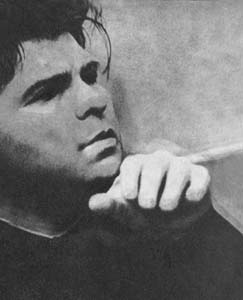
Music: Piano/Classical: Emil Gilels plays a fugue version of Bach by Ferruccio Busoni


Hat Tip to Luis Grassi Freire (Exonian).  See: YouTubeServices on refWrite's channel, yUT2ube.
Here in performance Gilels plays a version of a fugue by Johan Sebastian Bach, 
Prelude & Fugue in D major, BWV 532 - Fugue (2/2)
Emil Grigoryevich Gilels 
1919 - 1985
See: Biography of Emil Gilels (Wikipedia) and website In memoriam Emil Gilels.
and Donal Henahan, "MusicView: Who will replace 
the Old Guard in Soviet Music?" (NYT, Oct27,1985)
See also:  Emil Gilels - a Discography (2006) by Ates Tanin 
at the piano playing Ferruccio Busoni
Ferruccio (Dante Michelangelo Benvenuto) Busoni (1866 – 1924).
was an Italian composer,pianist, editor, writer, 
piano and composition teacher, and conductor. 

Aesthetics

Busoni's music can be considered in the context of his three major aesthetic beliefs: essence, oneness and junge Klassizität (literally 'young classicity'). The essence of music suggests that music is free from any prescriptive labels; in other words, it is absolute. For example, Busoni asked us to question just what it was in a piece of instrumental church music, that was inherently 'church'. The oneness of music proposes that music is free from prescriptive devices, and that there are endless possibilities of composition. Finally, in his words, junge Klassizität (often mistaken for neo-classicism) included 'the mastery, the sifting and the turning to account of all the gains of previous experiments and their inclusion in strong and beautiful forms' (Busoni, 'Letter to Paul Bekker', 1920).
His music falls in that most fractious of periods, the fin de siècle, where chromatic elements became part of the structure of the music, rather than being decoration. By studying Busoni's aesthetic beliefs we can suggest that his music is metatonal - given that he sought to include the old with the new to create limitless compositions. This is not to suggest (as Pfitzner did, when he attacked The Sketch of a New Aesthetic of Music by Busoni) that his music is without form, nor is it without any sense of tonality (a common mistake when one finds oneself between Classical and Serial music). This grey area of music history is more engaging because the traditional forms and pitch structures have taken a side road, a road that did not ultimately lead to serialism.
In order to understand Busoni's compositions one should take only what is given in the music, and interpret them through his aesthetic beliefs (though this is no easy task, and the everpresent binarism between what a composer says and what a composer does should be kept in mind). Busoni can be recognised as a man with a variety of musical abilities. He wrote compositions and libretti, performed as a concert pianist, transcribed pieces by other composers (such as Bach, Mozart and Liszt), taught master classes, and produced aesthetic writings. It is to this end that Busoni considered music a fusion of disciplines, or to use his words 'to recognise the whole phenomenon of music as 'oneness'. (Busoni, 'The Essence of Oneness of Music', 1921).
For more information on this see: Paul Fleet, Ferruccio Busoni: A Phenomenological Approach to his Music and Aesthetics (Lambert Academic Publishing, 2009).

Text and images from Busoni article in Wikipedia.


Bach-Busoni Editions

From Wikipedia, the free encyclopedia

The Bach-Busoni Editions are a series of publications by the Italian pianist-composer Ferruccio Busoni (1866-1924) containing primarily piano transcriptions of keyboard music by Johann Sebastian Bach. They also include performance suggestions, practice exercises, musical analysis, an essay on the art of transcribing Bach's organ music for piano, an analysis of the fugue from Beethoven's 'Hammerklavier' sonata, and other related material. The later editions also include free adaptations and original compositions by Busoni which are based on the music of Bach.
Busoni issued his Bach editions over a nearly 30-year span in two collections: the 25-volume Busoni Ausgabe[1] (Joh. Seb. Bach Klavierwerke) and the Bach-Busoni Collected Edition (Bach-Busoni Gesammelte Ausgabe), which was first issued in 6 volumes in 1916, and subsequently in 7 volumes in 1920. A small collection of selected excerpts with transcriptions of organ and violin music was also published separately in 1916 as Sechs Tonstücke (Six Tone Pieces).[2][3][4]

Text and image from article Bach-Busoni Editions (Wikipedia).